There are few homemade desserts as comforting as a freshly baked shortbread cookie. The combination of rich butter, delicate sweetness, and a tender crumb makes shortbread a timeless favorite. Add the warm flavor of butterscotch and little pieces of crunchy toffee, and you have a cookie that feels both classic and extra special.
These Butterscotch Shortbread Cookies are one of those easy cookie recipes that look elegant but do not require complicated decorating, special equipment, or advanced baking techniques. The dough is mixed in a few simple stages, shaped into a log, chilled, sliced, and baked. The result is a beautiful batch of golden-edged cookies with a soft, buttery center and delicious bursts of butterscotch and toffee.
What makes this recipe particularly convenient is the slice-and-bake method. Instead of rolling the dough and cutting out individual shapes, you simply form the dough into a cylinder and refrigerate it. Once it is firm, you slice it into rounds and bake. This makes the recipe an excellent choice for holiday baking, afternoon treats, cookie exchanges, homemade food gifts, or whenever you want something sweet without spending hours in the kitchen.
The flavor is also wonderfully balanced. Shortbread provides the rich buttery base, vanilla adds warmth, butterscotch brings a deep caramel-like sweetness, and toffee contributes a pleasant crunch. Cornstarch helps create the delicate texture associated with tender shortbread cookies, while a small amount of salt keeps the sweetness from becoming overwhelming.
If you love buttery cookies, homemade shortbread, butterscotch desserts, or easy slice-and-bake cookies, this recipe deserves a place in your collection.
What Makes These Shortbread Cookies So Special?
The beauty of shortbread is its simplicity. Unlike many modern cookie recipes that depend on numerous flavorings, fillings, frostings, or toppings, a traditional shortbread-style cookie allows a few basic ingredients to shine.
In this recipe, that simple foundation becomes even more flavorful with the addition of butterscotch chips and toffee bits.
The finished cookies have a delicate texture that breaks easily when bitten. They are rich without needing a heavy frosting, sweet without being overly complicated, and flavorful enough to serve on their own with a cup of coffee or tea.
The butterscotch adds a warm sweetness that works naturally with butter. Toffee provides a contrasting texture, giving certain bites a little extra crunch. Vanilla quietly ties everything together.
Another advantage is the appearance. Once sliced and baked, the round cookies have a simple homemade look that works beautifully on dessert platters. Their lightly golden edges and pale centers are exactly what you want from a good shortbread cookie.
The Secret Behind a Tender Shortbread Texture
When people think about shortbread, one phrase often comes to mind: melt-in-your-mouth.
That delicate texture does not happen by accident. It comes from the way the ingredients are combined and handled.
Butter is the primary source of richness and contributes significantly to the crumb. Powdered sugar is used instead of ordinary granulated sugar, helping create a smoother dough and a fine texture. Cornstarch further contributes to the delicate quality of the cookie.
Flour provides structure, but it needs to be handled carefully. Once flour is introduced, excessive mixing can make the dough tougher than intended. That is why the dry ingredients should be incorporated only until the dough comes together.
The chilling stage is equally important. It allows the butter to firm up after mixing and makes the dough easier to slice. It also helps the cookies hold their shape while they bake.
So although the ingredient list is simple, each step has a purpose.
Understanding the Ingredients
Every ingredient in this recipe contributes something important to the finished cookies.
Butter Creates the Rich Foundation
Butter is the heart of a good shortbread cookie. It gives the dough its richness, aroma, and tender texture.
For this recipe, the butter should be softened rather than melted. Softened butter can be beaten with powdered sugar until creamy, creating a smooth base for the dough.
Melted butter behaves differently and can make the dough excessively soft. It may also increase the likelihood of spreading during baking.
Allowing the butter to soften naturally at room temperature is usually the easiest approach.
Powdered Sugar Keeps the Crumb Delicate
Powdered sugar is especially useful in shortbread because of its fine texture. It blends smoothly into the butter and contributes to the delicate crumb that makes these cookies different from chewy chocolate chip cookies.
It also helps produce a smoother dough, which is ideal for a slice-and-bake cookie.
Flour Gives the Cookies Structure
All-purpose flour provides the structure needed for the dough to hold together.
The key is to add it gradually and avoid overmixing. Once the flour has been incorporated and a soft dough forms, there is no reason to continue beating it.
Cornstarch Adds Tenderness
Cornstarch is a useful ingredient in delicate cookies because it can help produce a softer, finer texture.
In this recipe, it works alongside the flour to create a cookie that is crisp around the edges while remaining tender rather than dense.
Salt Balances the Sweetness
Salt may be present in a small quantity, but it plays an important role. It balances the sweetness of the powdered sugar, butterscotch, and toffee while helping the buttery flavor stand out.
Without enough balance, very sweet cookies can taste flat. Salt gives the other flavors more definition.
Vanilla Brings Everything Together
Vanilla extract adds warmth and depth to the dough.
It works particularly well with butter and butterscotch, giving the finished cookies a pleasant bakery-style aroma.
Butterscotch Chips Add Signature Flavor
The butterscotch chips are what turn ordinary shortbread into a more indulgent cookie.
Butterscotch has a naturally rich, caramel-like character that pairs beautifully with butter. Chopping the chips into smaller pieces helps distribute that flavor throughout the dough.
It also makes the dough easier to slice after chilling.
Toffee Bits Provide a Crunchy Contrast
Toffee bits introduce a pleasant textural contrast. While the shortbread itself is tender, the toffee adds little crunchy pieces throughout the cookie.
The combination of soft, delicate shortbread and crisp toffee makes every bite more interesting.
Why Chopping the Butterscotch Chips Matters
It may seem unnecessary to chop the butterscotch chips, especially if they are already relatively small. However, smaller pieces can make a significant difference when preparing slice-and-bake cookies.
Large pieces can interfere with the knife as you cut through the chilled dough. They may pull at the dough or cause the rounds to break.
Smaller pieces are easier to distribute evenly and allow the cookies to maintain a cleaner shape.
You also get a more consistent flavor. Instead of biting into one cookie with a large concentration of butterscotch and another with very little, smaller pieces spread the flavor throughout the batch.
If you want neat-looking shortbread cookies for a holiday tray or gift box, this small preparation step is worth doing.
How the Dough Comes Together
The dough begins with the dry ingredients.
Whisk the flour, cornstarch, and salt together in a bowl. This distributes the ingredients evenly before they are added to the butter mixture.
In another bowl, beat the softened butter with powdered sugar until it becomes light and creamy. This creates the smooth base of the cookie dough.
Next comes the vanilla extract. Once the vanilla has been mixed in, gradually add the dry ingredients.
At this point, patience is important. Do not dump everything into the bowl at once and continue mixing for several minutes. Add the dry ingredients gradually and stop once the mixture forms a soft dough.
The dough does not need to be beaten until perfectly smooth. A tender shortbread benefits from gentle handling.
Finally, fold in the chopped butterscotch chips and toffee bits.
By folding them in rather than aggressively mixing them, you can distribute the additions without unnecessarily working the dough.
Shaping the Dough Into a Cookie Log
The slice-and-bake technique is one of the easiest features of this recipe.
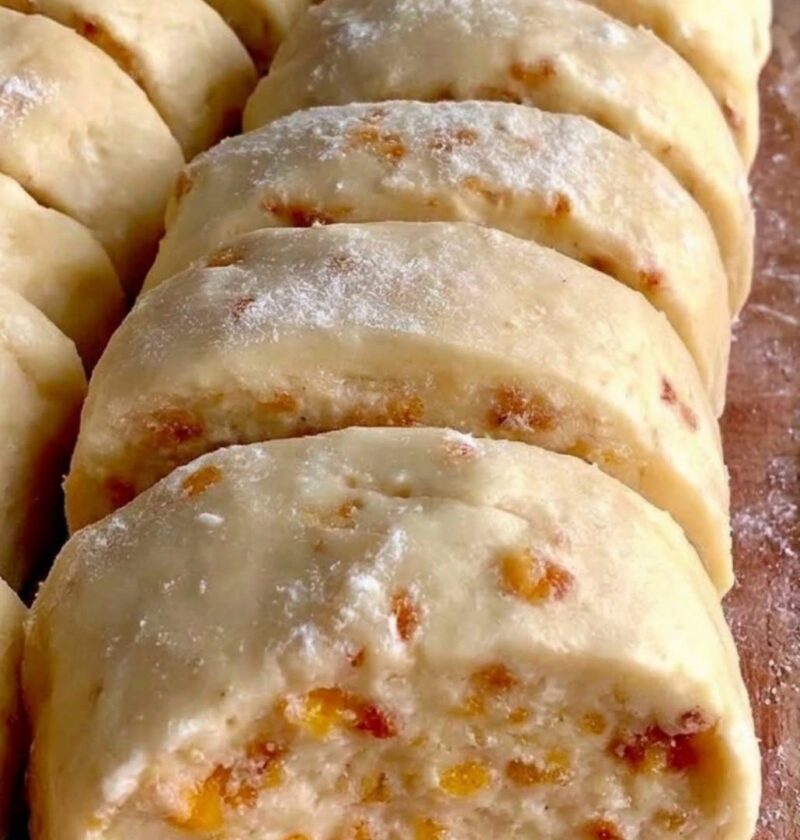
Place the finished dough onto plastic wrap and gently shape it into a log approximately 2½ to 3 inches thick.
Try to create an even cylinder. The more consistent the diameter, the more uniform your finished cookies will be.
Wrap the dough tightly in plastic wrap.
At this point, the dough may seem soft. That is completely normal. The refrigerator will take care of that.
Place the wrapped dough in the refrigerator and allow it to chill for at least 2 hours.
For the best results, resist the temptation to slice it too early.
Why Refrigerating the Dough Is Essential
Chilling is one of the most important steps in this entire recipe.
Shortbread dough contains a substantial amount of butter. When that butter is soft, the dough can be difficult to slice and more likely to spread in a hot oven.
Refrigeration firms the butter and makes the dough easier to work with.
It also helps the cookie rounds maintain their shape during baking.
If your cookies have ever spread into thin, irregular shapes, insufficient chilling could be one of the reasons.
A properly chilled dough log should feel firm when you remove it from the refrigerator. It should be easy to cut into rounds without collapsing under the knife.
Getting Clean, Round Cookie Slices
Once the dough has chilled, unwrap it and use a sharp knife to cut it into rounds approximately ¼ inch thick.
Try to make every slice as similar as possible.
Uniform thickness is important because it helps all the cookies finish baking at approximately the same time. If one cookie is very thin and another is twice as thick, the thinner one may brown before the thicker one is ready.
For especially neat slices, rotate the dough log slightly after making each cut. This helps prevent the log from developing a flat side.
If the dough becomes slightly soft while slicing, place it back in the refrigerator for a short period before continuing.
The goal is not to rush this step. Neat slices lead to neat cookies.
Preparing the Baking Sheet
Before the cookies go into the oven, line a baking sheet with parchment paper.
Parchment helps prevent sticking and provides an even baking surface. It is particularly helpful for delicate shortbread because you can lift the cookies away from the baking sheet without scraping or damaging their edges.
Make sure the oven has been fully preheated to 350°F (175°C) before baking.
Arrange the sliced rounds on the parchment-lined baking sheet with a little space between them.
They do not generally require a huge amount of room, but giving each cookie enough space prevents the edges from touching if they spread slightly.
Knowing When Shortbread Is Done
Bake the cookies for approximately 10–12 minutes.
The most important thing is not to judge them by a dark brown color.
Shortbread is meant to remain relatively pale. You are looking for edges that have developed a light golden color while the centers remain lighter.
If you wait until the entire cookie is deeply golden, you risk overbaking it.
Remember that the cookies will continue to firm up after they leave the oven.
Once the cookies are baked, allow them to rest on the baking sheet for about 2 minutes. This gives them a chance to stabilize before you move them.
Then transfer them carefully to a cooling rack.
The Difference Between Crisp and Overbaked
A well-baked shortbread cookie can have a delicate crispness around the edges while maintaining a tender interior.
There is a difference between a crisp cookie and an overbaked cookie.
A crisp shortbread has a pleasant buttery bite. An overbaked cookie may become dry, hard, or excessively crumbly.
Because the cookies are relatively thin, they can move from perfectly baked to overbaked quickly. Keep an eye on them during the final few minutes.
Your oven temperature, baking sheet, and exact cookie thickness can all influence the final baking time.
How to Avoid Cookies That Spread
If your cookies spread significantly during baking, examine the butter and chilling stages first.
Butter that was too warm can contribute to spreading. The same is true if the dough did not have enough time to chill.
Make sure you use softened butter for mixing, not melted butter.
After shaping the dough into a log, refrigerate it for the full recommended time.
If your kitchen is particularly warm, you can also keep the shaped dough chilled until you are ready to slice it.
The objective is to send firm, cold dough into the oven.
Avoiding Tough Shortbread Cookies
The opposite problem is a cookie that feels too firm or tough.
One possible cause is overmixing after the flour has been added.
Once flour comes into contact with moisture, mixing can develop gluten. Shortbread does not need extensive gluten development. In fact, the goal is almost the opposite: you want a delicate, tender crumb.
Therefore, mix only until the dry ingredients are incorporated and the dough comes together.
Another possible issue is overbaking. Even a perfectly prepared shortbread dough can become dry if it stays in the oven too long.
The Best Drinks to Pair With Butterscotch Cookies
These cookies are especially enjoyable with hot drinks.
Freshly brewed coffee is one of the easiest pairings. The slightly bitter notes of coffee provide a nice contrast to the sweet butterscotch and toffee.
Earl Grey tea is another excellent choice. Its aromatic character works beautifully with buttery baked goods.
For something creamier, serve the cookies with a chai latte. Warm spices such as cinnamon and other chai flavors complement the caramel-like sweetness of the butterscotch.
Hot chocolate is perfect when you want a richer dessert experience.
During warmer months, you can serve the cookies alongside vanilla ice cream or salted caramel ice cream.
The combination of cold, creamy ice cream and crisp-tender shortbread makes an easy dessert that requires very little additional preparation.
A Beautiful Addition to a Holiday Cookie Tray
These cookies are naturally suited to holiday baking.
Their round shape and golden edges make them look elegant without requiring icing or decorations.
Arrange them alongside other homemade cookies on a large dessert platter. Their buttery color and simple appearance can provide a nice contrast to brightly decorated sugar cookies or chocolate desserts.
They also make thoughtful homemade food gifts.
Once completely cooled, place them into a decorative cookie tin, treat box, or airtight container. Layering them carefully can help preserve their appearance.
Because they can be frozen, you can also prepare them ahead of a holiday gathering and thaw them when needed.
Making the Dough Ahead of Time
One of the biggest advantages of this recipe is that the dough can be prepared before baking day.
After shaping and wrapping the dough log, you can keep it refrigerated for up to 3 days.
This is convenient if you are planning a party, holiday dinner, bake sale, or cookie exchange.
Instead of doing every baking task on the same day, prepare the dough in advance. When you have time to bake, simply slice the chilled log and place the rounds on a parchment-lined baking sheet.
For even longer storage, the dough can be frozen for up to 3 months.
Wrap the log securely before freezing to protect it from freezer odors and drying.
When you are ready to bake, the dough can be baked directly from frozen, with approximately 1–2 additional minutes added to the baking time.
Freezing Baked Butterscotch Shortbread Cookies
The baked cookies can also be frozen.
Allow them to cool completely before placing them into a freezer-safe airtight container.
For best quality, use them within approximately 3 months.
When ready to serve, let the cookies thaw at room temperature.
Avoid sealing warm cookies in a container before freezing or storing them. Condensation can affect their texture and may cause them to become less crisp.
Optional Nutty Variations
The basic butterscotch and toffee combination is already flavorful, but nuts can be added if desired.
Chopped pecans, walnuts, or almonds are especially suitable.
Pecans provide a naturally rich, buttery flavor that pairs beautifully with butterscotch.
Walnuts provide a slightly deeper, earthy contrast.
Almonds offer a firmer crunch and a mild nutty flavor.
If you decide to add nuts, chop them fairly small so they do not interfere with slicing the chilled dough.
Why Powdered Sugar Is Better for This Style of Cookie
Powdered sugar is an important part of the texture.
Granulated sugar has larger crystals and behaves differently when incorporated into cookie dough. Powdered sugar is much finer and blends readily into the butter.
That helps create the smooth, delicate texture expected from shortbread.
For this particular recipe, sticking with powdered sugar is the better choice if you want the intended tender crumb.
A Few Simple Rules for Better Shortbread
The recipe is easy, but keeping a few principles in mind can improve your results.
Use softened butter, not melted butter.
Chill the dough thoroughly before slicing.
Use parchment paper on the baking sheet.
Keep the cookie slices approximately the same thickness.
Do not overmix after adding the flour.
Chop the butterscotch chips so the dough slices more cleanly.
Watch the cookies closely toward the end of baking.
Remove them when the edges are lightly golden instead of waiting for the entire surface to brown.
Finally, allow the cookies to cool before storing them.
These small details can make the difference between an average cookie and an excellent batch of homemade shortbread.
Frequently Asked Questions About Butterscotch Shortbread
Why did my shortbread cookies spread?
The most common reasons are butter that was too warm or dough that was not chilled sufficiently. Make sure the butter is softened for mixing but not melted, and refrigerate the shaped dough for at least 2 hours before slicing and baking.
Can I replace powdered sugar with granulated sugar?
Powdered sugar is recommended for this recipe because it contributes to the smooth, delicate texture associated with shortbread. Using granulated sugar may change the final texture.
Can I prepare the dough in advance?
Yes. The prepared dough can be refrigerated for up to 3 days or frozen for up to 3 months.
Can I freeze the finished cookies?
Yes. Fully cooled baked cookies can be frozen for up to 3 months. Allow them to thaw at room temperature before serving.
Why do I need to chop the butterscotch chips?
Smaller pieces distribute more evenly through the dough and make slicing the chilled dough easier. Large pieces can catch on the knife and cause the cookie rounds to break.
Can I add nuts?
Yes. Pecans, walnuts, and almonds are suitable additions if you want extra crunch and a nutty flavor.
Should shortbread cookies be brown?
Not usually. For this recipe, look for lightly golden edges while the centers remain relatively pale. Deep browning can indicate that the cookies have been baked too long.
How to Store Homemade Shortbread
After baking, allow the cookies to cool completely on a wire rack.
Place them into an airtight container and keep them at room temperature for up to 1 week.
For the best texture, keep the container tightly sealed and store it away from heat and direct sunlight.
If you are making several varieties of cookies, it is often better to store strongly flavored cookies separately so that their aromas do not transfer to the shortbread.
Approximate Nutrition Information
The estimated nutrition per cookie is approximately:
- Calories: 165
- Carbohydrates: 16g
- Protein: 1g
- Fat: 10g
- Saturated Fat: 6g
- Sugar: 7g
- Fiber: Less than 1g
- Sodium: 35mg
These numbers are estimates and can vary depending on the exact ingredients, brands, cookie size, and number of servings produced.
Why This Recipe Belongs in Your Cookie Collection
There are plenty of cookie recipes available, but a good shortbread recipe is worth keeping because it can be adapted for so many occasions.
These cookies are simple enough for a quiet afternoon of baking but special enough for a celebration.
They work as:
- Afternoon tea cookies
- Holiday cookies
- Christmas cookie platter additions
- Homemade food gifts
- Bake-sale treats
- Coffee-time snacks
- Dessert-table cookies
- Make-ahead freezer cookies
- Easy homemade treats
The combination of buttery shortbread, butterscotch, and crunchy toffee gives them a flavor that feels familiar while still being different from traditional plain shortbread.
Final Thoughts
These Butterscotch Shortbread Cookies prove that an uncomplicated recipe can produce an incredibly satisfying homemade dessert.
The buttery shortbread base provides a delicate foundation, while vanilla, butterscotch chips, and toffee bits create layers of warm sweetness and texture. Cornstarch helps keep the crumb tender, and powdered sugar contributes to the smooth, delicate consistency that makes shortbread so appealing.
The slice-and-bake method is another reason to love this recipe. Once the dough has been mixed and shaped, the refrigerator does most of the work. After chilling, the dough is simply sliced into rounds and baked until the edges turn lightly golden.
The key is to give the recipe enough time at each important stage. Do not melt the butter, do not overmix the dough, and do not skip the chilling period. These details help the cookies maintain their shape and achieve that tender shortbread texture.
If you are looking for an easy butterscotch cookie recipe, a homemade shortbread recipe, or a simple holiday cookie recipe, these cookies are a wonderful choice. They require no frosting and no complicated decoration, yet they have enough flavor to stand out on any dessert table.
Serve them with coffee, Earl Grey tea, chai, or hot chocolate for a comforting afternoon treat. For an indulgent dessert, pair them with vanilla or salted caramel ice cream.
And because both the dough and baked cookies can be frozen, you can prepare them well ahead of time. That makes these buttery cookies especially useful during busy holiday seasons when having a reliable make-ahead dessert can save valuable time.
Whether you bake them for a family gathering, package them as a homemade gift, or simply keep a batch in the kitchen for an afternoon sweet treat, these butterscotch shortbread cookies are the kind of recipe that can become a dependable favorite.
Part 2: Butterscotch Shortbread Cookies Recipe
These Butterscotch Shortbread Cookies are rich, buttery, tender, and filled with sweet butterscotch and crunchy toffee pieces. The dough is easy to prepare, chilled until firm, then sliced and baked for a classic slice-and-bake cookie that is perfect with coffee, tea, or a holiday dessert platter.
The cookies should have lightly golden edges with a pale, delicate center. For the best texture, use softened butter, avoid overmixing the dough, and allow the shaped dough log to chill completely before slicing.
Ingredients You’ll Need
- All-purpose flour — [use the original recipe quantity]
- Cornstarch — [use the original recipe quantity]
- Salt — [use the original recipe quantity]
- Butter, softened — [use the original recipe quantity]
- Powdered sugar — [use the original recipe quantity]
- Vanilla extract — [use the original recipe quantity]
- Butterscotch chips, chopped — [use the original recipe quantity]
- Toffee bits — [use the original recipe quantity]
Optional Ingredient Addition
If you want a little extra texture, chopped pecans, walnuts, or almonds can also work well with the butterscotch and toffee flavors. This is optional and is not required for the original recipe.
Equipment
You will need:
- Medium mixing bowl
- Large mixing bowl
- Whisk
- Electric mixer
- Rubber spatula or wooden spoon
- Plastic wrap
- Sharp knife
- Baking sheet
- Parchment paper
- Wire cooling rack
Preparation Time
Prep: About 20 minutes
Chilling: At least 2 hours
Baking: 10–12 minutes per batch
Oven Temperature: 350°F (175°C)
The total time will depend on how many batches you bake and how quickly the dough is prepared.
How to Make Butterscotch Shortbread Cookies
Step 1: Combine the Flour, Cornstarch, and Salt
Start by preparing the dry ingredients.
Add the all-purpose flour, cornstarch, and salt to a medium bowl. Whisk everything together thoroughly.
This simple step helps distribute the cornstarch and salt throughout the flour before they are added to the butter mixture. Even distribution is important because you want every cookie to have the same tender texture and balanced flavor.
Set the bowl aside while you prepare the wet ingredients.
Step 2: Beat the Butter and Powdered Sugar
Place the softened butter in a large mixing bowl.
Add the powdered sugar and beat the two ingredients together using an electric mixer. Continue mixing until the mixture looks smooth, light, and creamy.
The butter should be softened enough to mix easily but should not be melted.
This stage helps create the rich, tender texture associated with homemade shortbread cookies. Take your time here, but there is no need to overbeat the mixture excessively.
Step 3: Blend in the Vanilla
Add the vanilla extract to the creamed butter and powdered sugar.
Mix until the vanilla is evenly incorporated.
Vanilla adds a warm background flavor that complements both the buttery cookie base and the sweet butterscotch and toffee pieces.
Step 4: Add the Dry Ingredients
Begin adding the flour mixture gradually to the butter mixture.
Mix gently after each addition until the ingredients start coming together.
Continue only until a soft cookie dough forms.
Avoid prolonged mixing at this stage. Overworking the dough after the flour has been added can affect the delicate texture of the finished shortbread.
The dough should be soft and cohesive rather than wet or runny.
Step 5: Fold in the Butterscotch and Toffee
Before adding the butterscotch chips, finely chop them into smaller pieces.
Add the chopped butterscotch chips and toffee bits to the dough.
Use a rubber spatula or wooden spoon to gently fold them through the mixture.
Work carefully so the pieces become evenly distributed without unnecessarily mixing or kneading the dough.
Smaller pieces of butterscotch are particularly helpful because they make the dough easier to slice once it has been chilled.
Step 6: Shape the Dough Into a Log
Place a large sheet of plastic wrap on your work surface.
Transfer the prepared dough onto the plastic wrap.
Using your hands, gently shape the dough into a cylindrical log approximately 2½ to 3 inches thick.
Try to keep the diameter consistent from one end to the other. An evenly shaped dough log will produce more uniform cookie slices.
Wrap the dough tightly in the plastic wrap.
If necessary, gently roll the wrapped dough on the counter to help create a smooth, rounded shape.
Step 7: Chill Until Firm
Place the wrapped dough log in the refrigerator.
Allow it to chill for at least 2 hours.
Do not skip this step.
Chilling firms the butter and makes the dough much easier to slice. It also helps the cookies hold their shape in the oven and reduces excessive spreading.
The dough should feel firm when you remove it from the refrigerator.
Make-Ahead Option
The dough can be prepared ahead of time and kept refrigerated for up to 3 days.
For longer storage, the wrapped dough log can be frozen for up to 3 months.
This makes the recipe particularly convenient for holiday baking or preparing desserts in advance.
Step 8: Prepare the Oven
When you are ready to bake, preheat the oven to:
350°F (175°C)
Line a baking sheet with parchment paper.
Parchment helps prevent the cookies from sticking and makes it easier to transfer the delicate baked shortbread from the baking sheet.
Make sure the oven has reached the correct temperature before placing the cookies inside.
Step 9: Slice the Chilled Dough
Remove the chilled dough from the refrigerator and unwrap it.
Using a sharp knife, slice the dough into rounds approximately ¼ inch thick.
Try to keep each slice as even as possible.
Consistent thickness helps the cookies bake at the same rate. Very thin slices can brown quickly, while thicker slices may require additional baking time.
For a more rounded appearance, slightly rotate the dough log after each slice. This helps prevent the log from developing a flat side as you continue cutting.
If the dough becomes too soft while slicing, return it to the refrigerator for a little while before continuing.
Step 10: Arrange the Cookie Slices
Place the sliced dough rounds onto the parchment-lined baking sheet.
Leave a little space between the cookies so they have room to spread slightly during baking.
Avoid overcrowding the baking sheet.
If you have more dough than will fit comfortably on one baking sheet, keep the remaining dough refrigerated while the first batch bakes.
Keeping unused dough cold helps maintain the texture and shape of the cookies.
Step 11: Bake Until the Edges Are Lightly Golden
Place the baking sheet in the preheated oven.
Bake the cookies for approximately 10–12 minutes.
Keep an eye on them toward the end of the baking time.
The ideal appearance is a pale cookie with lightly golden edges. You do not want the entire surface to become deeply brown.
Shortbread can become dry if it is overbaked, so remove the cookies once the edges show a light golden color.
Remember that baking time can vary slightly depending on your oven and the thickness of your cookie slices.
Step 12: Let the Cookies Rest
When the cookies are finished baking, remove the baking sheet from the oven.
Allow the cookies to rest on the baking sheet for about 2 minutes.
This short resting period allows the cookies to firm up slightly while they are still warm.
After about 2 minutes, carefully transfer them to a wire cooling rack.
Let them cool completely before storing.
The cookies may feel delicate when they first come out of the oven, but they will become firmer as they cool.
Tips for the Best Butterscotch Shortbread
Use Softened Butter
Butter should be soft enough to beat smoothly with the powdered sugar but should never be melted.
Melted butter can make the dough excessively soft and may cause the cookies to spread during baking.
Chill the Dough Properly
The refrigeration step is essential.
A thoroughly chilled dough log is easier to slice and helps the cookies maintain their round shape.
If your kitchen is warm, do not hesitate to chill the dough for longer if necessary.
Do Not Overmix
Once the flour mixture has been incorporated, stop mixing when the dough comes together.
Overmixing can lead to a firmer texture rather than the tender, delicate crumb you want from shortbread.
Chop the Butterscotch Chips
Finely chopped butterscotch chips are easier to distribute through the dough.
They also make slicing the chilled dough much easier.
Large pieces can catch on the knife and cause the dough rounds to break or crumble.
Keep the Cookie Slices Even
Try to cut each round to approximately ¼ inch thick.
Uniform slices bake more evenly and give the finished batch a consistent appearance.
Watch the Color
Shortbread does not need to become dark brown.
Look for lightly golden edges and relatively pale centers.
If the cookies become deeply browned, they may have been baked too long.
How to Tell When the Cookies Are Done
Because these cookies are light in color, it can sometimes be difficult to judge their doneness.
Look at the edges first.
When the edges have changed from pale dough to a subtle golden color, the cookies are generally ready.
The centers can still look relatively pale.
Do not wait for the entire cookie to become golden brown.
The cookies will continue to firm as they cool on the baking sheet and then on the cooling rack.
Why Are My Cookies Spreading?
If your cookies spread more than expected, check the temperature of the butter and dough.
The butter may have been too warm when the dough was prepared, or the shaped dough log may not have been chilled long enough.
Always use softened butter rather than melted butter.
After shaping the dough, refrigerate it for at least 2 hours.
If the dough feels soft while you are slicing it, return it to the refrigerator before baking.
Why Are My Shortbread Cookies Too Hard?
There are two common possibilities: overmixing and overbaking.
Once the flour has been incorporated, avoid mixing the dough more than necessary.
Also keep a close eye on the cookies during the final minutes in the oven.
Shortbread should have a delicate, buttery texture. Deep browning or excessive baking can make it dry and hard.
Can I Make These Cookies in Advance?
Yes.
The dough can be prepared ahead of time and stored in the refrigerator for up to 3 days.
You can also freeze the wrapped dough log for up to 3 months.
When you want fresh cookies, slice the chilled dough and bake as directed.
For frozen dough, you can bake directly from frozen and add approximately 1–2 minutes to the baking time.
Check the edges carefully so the cookies do not become overbaked.
How to Store Baked Shortbread Cookies
Allow the cookies to cool completely before storing them.
Place them in an airtight container and keep them at room temperature for up to 1 week.
Keeping the container tightly sealed helps protect the cookies from moisture and helps preserve their texture.
Do not store the cookies while they are still warm because trapped heat and moisture can soften them.
How to Freeze the Finished Cookies
Baked cookies can be frozen for up to 3 months.
Once completely cooled, place them in a freezer-safe airtight container.
When you are ready to serve them, allow the cookies to thaw at room temperature.
They are especially convenient to freeze before holidays, parties, or other occasions when you want homemade cookies ready without baking at the last minute.
Delicious Ways to Serve These Cookies
These buttery shortbread cookies pair beautifully with hot drinks.
With Coffee
The rich flavor of coffee provides a pleasant contrast to the sweetness of the butterscotch and toffee.
With Earl Grey Tea
Earl Grey’s aromatic flavor works especially well with buttery baked goods.
With Chai Latte
Warm chai spices complement the caramel-like notes of the butterscotch.
With Hot Chocolate
For a more indulgent dessert, serve the cookies alongside a warm mug of hot chocolate.
With Ice Cream
Vanilla ice cream and salted caramel ice cream are both excellent choices.
The contrast between creamy, cold ice cream and crisp-tender shortbread makes a simple but satisfying dessert.
Optional Add-Ins
The original combination of butterscotch chips and toffee bits provides plenty of flavor, but nuts can also be incorporated if desired.
Good options include:
- Chopped pecans
- Chopped walnuts
- Chopped almonds
Pecans are particularly delicious with butterscotch because of their rich, buttery flavor.
Keep any additional pieces relatively small so the dough remains easy to shape and slice.
Recipe Storage Summary
Room temperature: Up to 1 week for baked cookies
Refrigerator: Dough can be kept for up to 3 days
Freezer: Baked cookies can be frozen for up to 3 months
Frozen dough: Dough log can be frozen for up to 3 months
Baking frozen dough: Bake directly from frozen and add approximately 1–2 minutes to the normal baking time.
Quick Recipe Summary
Recipe: Butterscotch Shortbread Cookies
Style: Slice-and-bake cookies
Oven: 350°F (175°C)
Chilling: At least 2 hours
Baking: 10–12 minutes
Texture: Tender, buttery, lightly crisp around the edges
Main flavors: Butter, vanilla, butterscotch, and toffee
Best for: Holidays, afternoon tea, coffee breaks, dessert platters, cookie gifts, and everyday baking
Final Recipe Notes
For the most reliable results, remember the four most important steps: use softened butter, avoid overmixing, chill the dough thoroughly, and remove the cookies when their edges are only lightly golden.
The finished Butterscotch Shortbread Cookies should have a delicate shortbread texture with sweet butterscotch pieces and little bursts of crunchy toffee. They are simple enough for everyday baking but special enough for holiday cookie trays and homemade gifts.