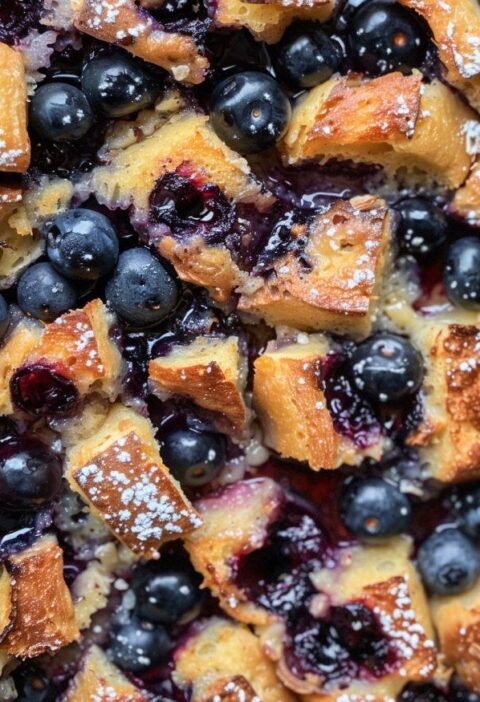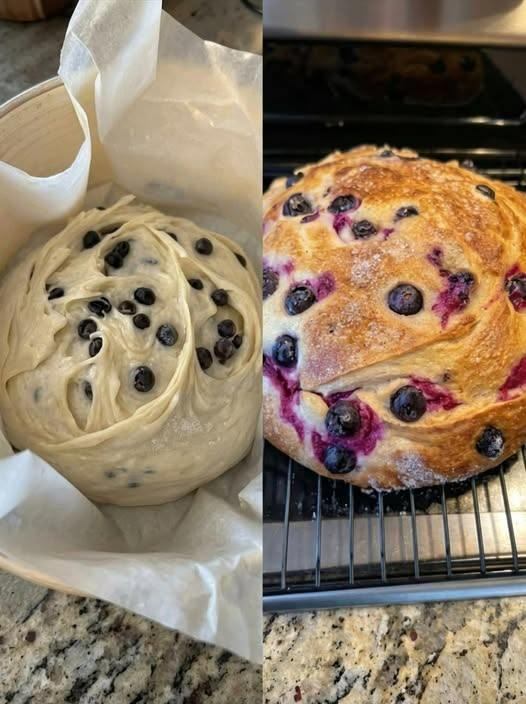
This lemon blueberry cream cheese bread is a beautifully enriched, bakery-style loaf that sits between several baking styles at once. It blends the structure of sourdough-inspired dough, the richness of an enriched sweet bread, and the layered beauty of filled or laminated bakery loaves.
The result is a soft, tender crumb with creamy pockets of cream cheese and bursts of blueberry filling, all brightened with fresh lemon zest and juice.
Unlike a simple rustic loaf, this dough behaves more like a rich pastry dough. Because it contains butter, egg, sugar, and dairy-based filling, it becomes softer, more delicate, and slightly slower to ferment. That is completely normal and expected.
This is not a rushed bread. It is a slow, careful baking project that rewards patience with an incredibly soft, flavorful, and visually stunning loaf.
What Makes This Bread Unique and Special
This recipe sits in a category of its own because it combines multiple baking styles:
- Enriched sourdough-style dough (butter, egg, sugar added)
- Filled and layered bread structure (cream cheese + blueberry filling)
- Soft breakfast loaf texture
- Slightly dessert-like sweet bread profile
The combination creates a loaf that is:
- Soft and pillowy inside
- Lightly sweet and tangy
- Creamy and fruity in every bite
- Aromatic with fresh lemon notes
- Slightly rich due to butter and egg
Because of these additions, fermentation behaves differently compared to standard bread. The dough rises more slowly and feels softer and more elastic.
Understanding this behavior is key to success.
Ingredient Roles and Why Each One Matters
Although the ingredient list looks simple, every component has a precise function in structure, flavor, and texture.
Flour: Structure and Strength Foundation
Bread flour is the primary structure builder in this dough. It contains more protein, which helps develop gluten strength needed to hold fillings.
A portion of all-purpose flour can be blended in to soften the final texture.
- Bread flour = structure and chew
- All-purpose flour = softness
This combination gives a balanced crumb that is neither too dense nor too airy.
Water: Hydration and Dough Formation
Water activates gluten development and brings the dough together.
In enriched doughs, hydration feels slightly different because egg, butter, and dairy components add softness and moisture indirectly.
Active Sourdough Starter: Natural Leavening Power
The starter is the fermentation engine of this bread.
It must be:
- Active
- Bubbling
- Recently fed (within 4–6 hours)
A weak starter will result in:
- Poor rise
- Dense crumb
- Heavy texture
Sugar: Flavor and Fermentation Support
Sugar is not just for sweetness.
It also:
- Supports yeast activity
- Enhances browning
- Adds gentle sweetness
- Balances lemon acidity
Egg: Richness and Soft Structure
Eggs contribute:
- Soft crumb texture
- Rich flavor
- Improved structure stability
- Tender bite
Egg makes the dough more luxurious and cake-like in softness.
Butter: Softness and Flavor Depth
Butter is added gradually during kneading to avoid breaking gluten structure too early.
It:
- Softens crumb
- Adds rich flavor
- Improves tenderness
- Slows gluten development slightly
Lemon (Zest + Juice): Brightness and Aroma
Lemon is essential for balance.
- Zest provides strong citrus aroma
- Juice adds acidity and freshness
Always use fresh lemons for best results.
Blueberries: Fruity Burst Filling
Blueberries provide:
- Natural sweetness
- Juicy bursts in each bite
- Moisture and flavor contrast
Fresh berries are ideal, but frozen can be used carefully.
Cream Cheese: Creamy Tangy Layer
Cream cheese adds:
- Creamy texture
- Slight tanginess
- Dessert-like richness
It balances both the sweet and citrus elements of the bread.
Preparing an Active Starter (If Needed)
If your sourdough starter is not fully active:
Mix:
- 50g starter
- 50g flour
- 50g water
Let it ferment until:
- Doubled in size
- Bubbling on top
- Light tangy aroma
This usually takes 4–6 hours depending on room temperature.
Autolyse Step (Important Dough Development Stage)
Mix only:
- Flour
- Water
Until no dry flour remains.
Rest the mixture for 30–45 minutes.
This step:
- Starts gluten formation naturally
- Improves elasticity
- Makes kneading easier
- Enhances final texture
Skipping this step reduces dough quality significantly.
Building the Enriched Dough
After resting, add:
- Active starter
- Sugar
- Egg
- Lemon zest
- Lemon juice
- Vanilla
Mix until fully combined, then add salt.
Salt is added later because it controls fermentation and strengthens gluten structure.
Kneading and Butter Integration Technique
Kneading begins once the ingredients are combined.
At first, the dough will feel sticky and uneven. This is expected.
After a few minutes:
- Dough becomes smoother
- Gluten begins strengthening
Now add butter gradually in small pieces.
Important rule:
Do NOT add butter all at once.
If added correctly:
- Dough may look broken or greasy temporarily
- It will eventually come together again
Final dough should be:
- Smooth
- Elastic
- Slightly tacky
- Stretchable (windowpane test ready)
Bulk Fermentation (Slow Development Phase)
Place dough in a bowl and cover it.
Let it rest for 4–6 hours at room temperature.
Stretch and Fold Method (First 2 Hours)
Every 30 minutes:
- Stretch dough upward
- Fold over itself
- Rotate and repeat
This strengthens gluten without heavy kneading.
Fermentation Signs
- Dough rises 50–75%
- Feels airy
- Slightly jiggles when moved
Do NOT wait for full doubling due to enriched dough structure.
Blueberry Filling Preparation (Thick Jam Style)
In a saucepan combine:
- Blueberries
- Sugar
- Cornstarch
- Lemon juice
Cook on medium heat until:
- Berries release juice
- Mixture thickens
- Jam-like consistency forms
Adjust as needed:
- Too thin → cook longer
- Too thick → add small water splash
Cool completely before using.
Hot filling will damage dough structure.
Cream Cheese Filling Preparation
Mix until smooth:
- Cream cheese
- Sugar
- Vanilla
- Lemon zest
Beat until lump-free.
If too thick:
Add a small amount of milk (1–2 tsp).
Chill slightly for easier spreading.
Rolling, Filling, and Shaping Process
Lightly flour the surface.
Roll dough into a rectangle about 1 cm thick.
Layering Order
- Spread cream cheese evenly
- Add cooled blueberry filling
Do not overfill or leakage will occur.
Roll tightly from one side, maintaining tension.
Seal edges firmly.
Shaping Variations
- Twist loaf (cut and twist halves)
- Braided loaf (divide and braid strands)
- Swirl loaf (place in pan directly)
Final Proof Stage
Place shaped dough into a pan.
Cover loosely and let it rise 2–4 hours.
Or use cold proofing:
- Refrigerate 8–12 hours
Cold proofing improves:
- Flavor depth
- Dough handling
- Structure stability
Ready Indicators
- Dough looks puffy
- Springs back slowly when pressed
Baking Instructions
Preheat oven to 180°C.
Brush top with:
- Egg wash or milk
Bake for 35–45 minutes.
Signs of Completion
- Golden brown crust
- Slight bubbling filling (normal)
- Internal temperature 90–95°C
If browning too fast:
Cover with foil.
Cooling Process (Essential Step)
Let bread cool in pan for 10–15 minutes.
Then transfer to rack.
Cool completely before slicing.
This ensures:
- Filling sets properly
- Structure stabilizes
- Clean slicing
Cutting too early will cause collapse.
Optional Glaze Finish
Mix:
- Powdered sugar
- Lemon juice or milk
Drizzle over cooled bread for bakery-style finish.
Flavor and Texture Profile
This bread delivers:
- Soft enriched crumb
- Creamy filling pockets
- Sweet blueberry bursts
- Bright lemon aroma
- Balanced tangy-sweet flavor
Common Baking Issues and Solutions
Dense bread → weak starter
Leakage → overfilled dough
Sticky dough → too much warmth or butter added too early
Overproofing → reduced fermentation time needed
Storage Guidelines
- Room temperature: 1–2 days
- Refrigerator: up to 5 days
- Freezer: up to 2 months
Reheat slightly before serving for best texture.
Variations You Can Try
- Strawberries or raspberries instead of blueberries
- Orange zest instead of lemon
- White chocolate additions
- Streusel topping
- Nutty fillings
Final Thoughts
This lemon blueberry cream cheese sourdough-style bread is a patience-based baking project that rewards careful handling and time. The combination of enriched dough, fruity filling, and creamy layers creates a bakery-quality loaf with complex texture and flavor.
Success depends on:
- Active starter
- Proper fermentation timing
- Gentle shaping
- Careful filling balance
Once mastered, this recipe becomes a show-stopping homemade bakery bread perfect for breakfast, brunch, or dessert.